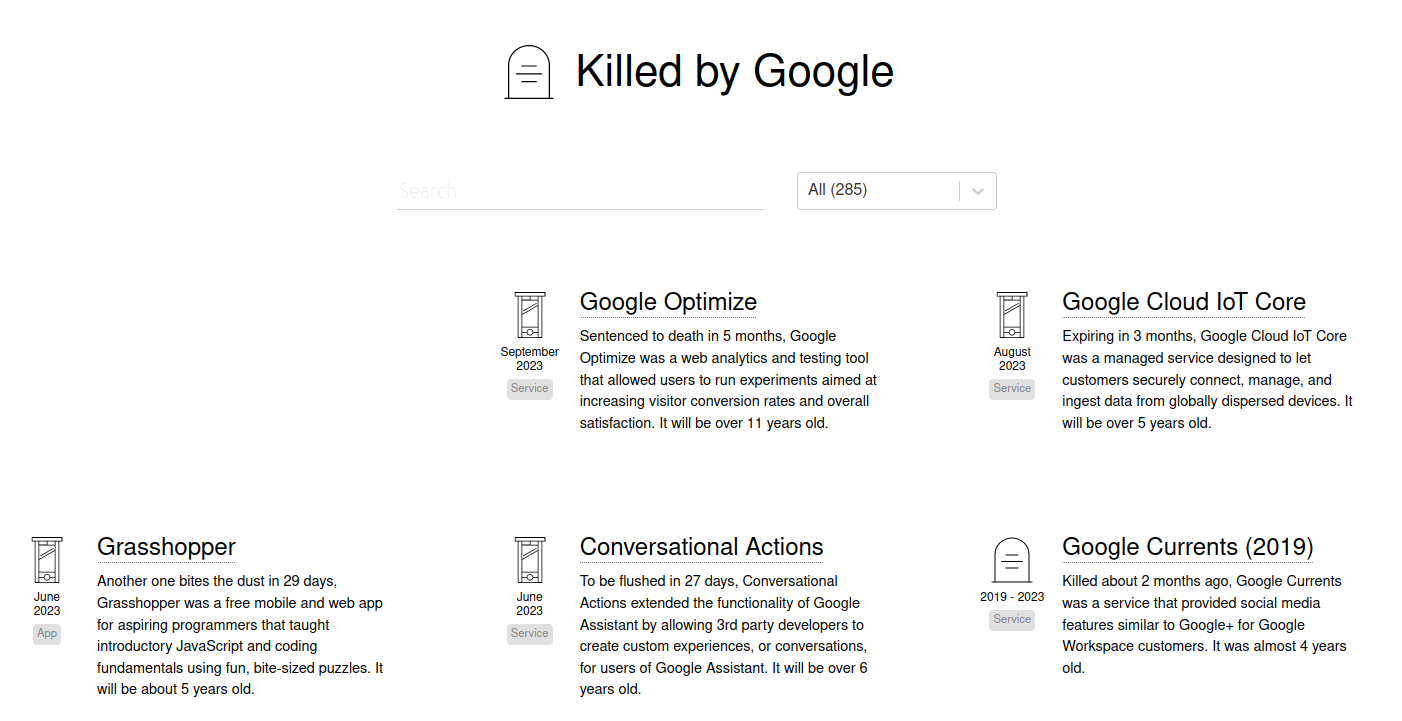
The way small & medium teams analyze their website data is crucial for the process of data driven decision-making and operations. Google Analytics, a long-standing giant in the field of web analytics, is undergoing a significant shift with the replacement of Universal Analytics by Google Analytics 4 (GA4) as announced here. This is not the first time big tech companies kill platforms after they have locked-in their users. The list of products killed by Google is long and is better reflected in the ‘Killed by Google’ project, where you can find all the platforms that have been shut down by a corporation that once was known by the unofficial slogan ‘don’t be evil’.
As this change looms, many small and medium teams are reconsidering their analytics strategies and seeking alternatives. The big tech corp started offering the service for free (as in free beer, not as in freedom) and, without a solid open source alternative at the time, it has managed to vendor lock-in many teams in their proprietary platform. Now they are aiming to change the rules of engagement, an approach we have seen for more than a decade with the freemium model, where your data are their product.
The good news? With the upcoming change to Google Analytics 4 on July 1, 2023, now is the right time to consider an open-source alternative like Matomo Analytics. Choosing or changing analytics software is quite an important decision. That’s why we will explore the key differences between proprietary web analytics solutions like Google Analytics and open-source solutions like Matomo Analytics. Furthermore, we want to explain why Matomo is the ideal choice for small teams like yours that value their users’ privacy, flexibility, and data control and how we make it easy for you to have your own managed Matomo instance.
Google Analytics: The Proprietary Titan
Google Analytics has dominated the web analytics sphere for a long time, offering an established platform with a wide array of features. However, it is essential to understand that Google Analytics is proprietary software. This model restricts user freedom, limiting customization and flexibility, and potentially raising data privacy concerns. Notably, Google Analytics has been generated concerns in some EU countries due to these privacy issues, further highlighting the need for alternatives. In the sidenotes of this blog post we have listed some of the issues the platform has had with EU data protection regulators over the years. These issues have led to a growing demand for open-source software that provide you with greater flexibility and control over your data.
Matomo Analytics: Open Source and Flexible
Matomo Analytics, formerly known as Piwik, is an open-source web analytics platform that offers you a greater level of freedom and control compared to proprietary solutions like Google Analytics. With Matomo, you own your data and have the option to host it on your server or choose a trusted managed hosting provider like our team. This makes Matomo an ideal solution for teams that prioritize data privacy and control over short term convenience.
More freedom of choice with Matomo Analytics
With Matomo, you have a multitude of choices. You can decide to deploy and manage the software yourself, choose our team to handle all the tech work for you, the official Matomo team, or another managed hosting provider. The freedom of choice that Matomo provides is another reason why it is an ideal alternative to proprietary analytics platforms that always try to lock in you and your team.
Features of Matomo Analytics
Matomo is not just an open-source solution; it is a comprehensive, feature-rich web analytics platform. Some of its features include:
- User Privacy: it respects user privacy, offering anonymization features, opt-out mechanisms, and no data sampling.
- 100% Data Ownership: With Matomo, you own your data. There’s no sharing with advertising platforms or third-party services.
- Customizable Dashboard: Matomo’s dashboard is fully customizable, allowing you to view the metrics most important to your business.
- On-Premise Hosting: Host Matomo on your servers, maintaining complete control over your data. You can also pick one of the managed hosting providers like the Matomo team or teams like ours that are sensitive about users privacy and software freedom.
- Real-time Reporting: Receive real-time updates and reports on your web traffic.
- Integration with popular platforms: Matomo offers seamless integration with popular content management systems (CMS) like WordPress, Drupal, and Joomla.
Managed Hosting Solution for Matomo Analytics from our team
At Cloud68.co, we understand that migrating to a new analytics platform can be daunting, especially for small and medium-sized teams with limited resources. That’s why we offer a hassle-free managed hosting solution for Matomo Analytics, allowing you to focus on your business while we take care of the technical aspects. Here is what you get with our Starter or Medium Matomo managed hosting packages:
- Deployment: We deploy Matomo Analytics on your domain or subdomain of choice.
- Backups: Depending on your chosen package, we set up weekly or daily backups to ensure data safety.
- SSL Certificate: We manage SSL certificates using Let’s Encrypt so you don’t have to.
- Software Updates: We update your Matomo instance to the latest stable version, ensuring you always have the most up-to-date features and security patches.
- Support: Our friendly tech support team will answer any questions and solve any issues that may arise during your Subscription through our dedicated support portal.

Sidenote: concerns in EU about Google Analytics
Below are some concerns and discussions about data protection and privacy regulations, primarily due to the General Data Protection Regulation (GDPR). These are some of the cases when European Data Protection Authorities in some countries have taken action against or voiced concerns about Google Analytics’ compliance with GDPR.
-
In October 2020, the Austrian Data Protection Authority (DPA) issued a decision stating that Google Analytics could potentially violate GDPR. While this did not result in a ban, it led to increased scrutiny of Google Analytics’ practices. (Source: Austrian DPA decision, available in German at ris.bka.gv.at/Dokument.wxe?Abfrage=Dsk&Dokumentnummer=DSBT_20201015_DSB_000_DSB_DSB).
-
In January 2021, the French Data Protection Authority (CNIL) issued recommendations for website operators using third-party cookies or similar technologies, which included Google Analytics. CNIL did not ban Google Analytics, but urged companies to comply with their guidelines to avoid fines. (Source: CNIL Press Release, available in French at cnil.fr/fr/cookies-et-autres-traceurs-la-cnil-publie-de-nouvelles-lignes-directrices).
-
In July 2021, the Court of Justice of the European Union (CJEU) ruled in the “Schrems II” case that the EU-US Privacy Shield was invalid due to concerns about US surveillance practices. This ruling created uncertainty for companies relying on Google Analytics and similar tools, as data transfers from the EU to the US became more complicated. (Source: CJEU press release, available at curia.europa.eu/jcms/upload/docs/application/pdf/2020-07/cp200091en.pdf).
Interested in a Matomo instance?
Contact our team through our contact page or schedule a call easily with one of our team members and we will answer all your questions.